Wedding Loans
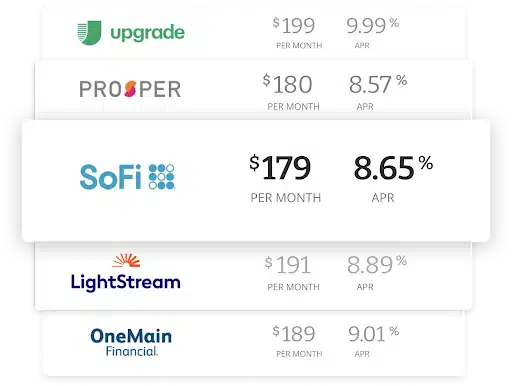
Compare monthly payment options from several lenders in under 2 minutes.


Personal Loan for Wedding Expenses
If you need to finance a wedding you can use a personal loan, secured loan, credit card, or other financing option. A personal loan may be one of the best options available. How you pay for your wedding will depend on your financial position and your wedding plans. Some venues and or vendors may require deposits or allow payments leading up to your wedding day. If you are using a credit card(s) you will want to make sure your vendors and venue allow credit cards. In some cases, you may have to pay a fee to use a credit card. In most cases, personal loans do not require collateral and offer fixed monthly payments. If you need to apply for a personal loan for wedding expenses, keep reading.
Learn More About Wedding Loans
It's common for couples to use a personal loan for wedding expenses. As you prepare for the big day and set out in search for the perfect venue, you may quickly learn that financing is not offered by many vendors. Ideally, all of your wedding expenses would be paid for upfront using cash from your checking or savings account. Some couples may also receive help paying for their big day from the parents of the bride and/or groom. Traditionally, this is the way most weddings were paid for.
Read more - FAQ
How do you actually pay for your wedding?
When it comes time to pay for your wedding, you have several options, including a debit card, credit card, cash, check, or financing. Most wedding vendors require an initial deposit to secure their services, with the remaining balance due before or on the wedding day. Some venues, bridal shops, jewelry stores, and other wedding vendors may also offer in-house financing or payment plans to help spread out the cost of your big day.
If you decide to finance your wedding, compare the interest rates, fees, repayment terms, and total borrowing costs of each option. Depending on your credit score and financial situation, a personal loan may offer a lower interest rate than a credit card, particularly if you need to cover a large expense. However, some credit cards offer promotional interest rates or rewards that may be beneficial if you can repay the balance before interest charges begin.
Before borrowing, consider how your wedding expenses will fit into your overall budget and whether you can comfortably afford the monthly payments. Comparing financing options and setting a realistic spending limit can help you celebrate your big day without taking on more debt than you can manage.
How do you pay for a wedding if you're broke?
There are several ways to plan a wedding on a limited budget, even if you don't have much money saved. One option is to extend your engagement and give yourselves more time to save before paying for wedding expenses. Another increasingly popular approach is to elope or hold a small ceremony now and plan a larger celebration or reception later when you can afford it.
In general, the smaller your wedding, the less you can expect to spend. Reducing your guest list can make a significant difference, especially if your venue and catering costs are based on the number of attendees. You can also save money by choosing an affordable venue, such as a community center, public park, or private backyard, rather than an expensive event space.
With help from friends and family, you may be able to organize a simple backyard wedding without spending a fortune. Consider other ways to reduce costs, such as choosing seasonal flowers, preparing your own decorations, purchasing secondhand wedding attire, or skipping extras that aren't important to you and your partner.
If having a larger wedding is important to you, there are financing options to consider, including credit cards and personal loans. However, borrowing money adds to the overall cost of your wedding and creates a financial obligation after the celebration is over. Home equity loans and lines of credit are another option for eligible homeowners, but they use your home as collateral and put it at risk if you cannot make your payments.
You can also ask your parents or other family members whether they would be willing to contribute to the wedding expenses. Some couples receive financial help from loved ones, while others choose to cover the costs themselves. Traditionally, the bride's family often paid for many wedding expenses, but today, arrangements vary depending on each couple's preferences and financial circumstances.
Ultimately, your wedding doesn't have to be extravagant or look like something out of a magazine to be meaningful. Focus on the elements that matter most to you and your partner, set a realistic budget, and avoid taking on debt you cannot comfortably repay. Starting your marriage on solid financial footing can be far more valuable than hosting an expensive celebration.
Do the bride's parents still pay for the wedding?
Traditionally, the bride's parents were expected to cover most or all of the wedding expenses, including the ceremony, reception, and certain costs associated with the bride and bridal party. However, wedding payment customs have evolved, and there is no universal rule about who should pay for a wedding today.
Traditionally, the groom and his family were often expected to cover expenses such as the marriage license, officiant, groom's attire, rehearsal dinner, and honeymoon. Depending on the family's customs and preferences, they might also contribute toward wedding rings, reception alcohol, and other expenses. Today, these responsibilities are often divided differently, with many couples choosing to pay for some or all of their own wedding costs.
It has also become common for both sets of parents to contribute financially, either by splitting expenses evenly or by covering specific costs they can comfortably afford. Some families contribute a set amount, while others offer to pay for particular services, such as catering, photography, or the venue.
Ultimately, who pays for a wedding depends on the couple's financial situation, family traditions, and how much financial assistance their loved ones are willing and able to provide. Couples should have open conversations with their families early in the planning process to establish expectations and determine a realistic budget.
Paying for your own wedding can also give you greater control over the planning process, including your choice of venue, vendors, guest list, and overall style. Whether you receive financial help from family or cover the expenses yourselves, the most important thing is to agree on a budget that works for everyone involved.
Can I use my 401k to pay for my wedding?
While it is usually not recommended to dip into your retirement savings, you and your future spouse certainly can use your 401k to pay for wedding expenses. Just keep in mind that you will be penalized heavily for the privilege of doing so. When you take money out of your 401k early, you will be hit with an early withdrawal fee and will also be taxed on the amount taken out.
Not to mention, you are borrowing against your own future when you do this. By taking out the funds early, you are missing out on the returns that you could have earned with that money.
Financial experts recommend against taking money out of your retirement accounts early for any reason. If you do end up using your 401k to pay for your wedding, be sure to repay all of the money back that you borrowed in order to ensure you don't miss out in your later years.
Borrowing or withdrawing from a 401k should always be a last resort used for emergencies.
Roth IRAs are typically a better option for saving and investing with future life events in mind.
In general, smart financial advice is to not have a wedding that you cannot afford to pay for. But if you absolutely must finance your wedding, there are much better options than your 401k.
Can I borrow money for a wedding?
Wedding loans are becoming a popular loan option offered by many banks, credit unions, and other financial institutions today. While paying for your big day out of pocket is always preferable, these personal loans offer couples a smart financial alternative to using credit cards to pay for their wedding expenses. Credit cards typically have higher interest rates and larger monthly payments than installment loans, making personal loans the better choice to borrow money for your wedding. You may also be able to borrow money from a parent or grandparent.
You don't want to bring unnecessary financial stress into your future, so be sure that whatever method you and your future spouse use to pay for your wedding is a wise and manageable one.
How much money should I have before getting married?
The answer to this question depends on a few factors including who is paying for your wedding, what the budget is for your wedding, and what your own personal financial situation is like.
Some people prefer to have a cheap wedding while prioritizing the honeymoon or the purchase of a new home after they get married. On the other hand, other couples would rather save up to have an extravagant wedding even if it means an extended engagement.
The average engagement period in the United States is approximately 15 months, with finances often playing a major factor in choosing to wait. But if you are going to have a small wedding or will have the majority of your wedding expenses covered by parents, then you will not need to have much money in your pocket at all before getting married.
From a smart financial standpoint, couples should focus on starting their new lives together with as much money as possible while avoiding taking on too much debt to pay for the wedding. If you do need to finance some of your wedding expenses, a low interest personal loan can be a much better option than using high interest credit cards.
You can look up average wedding expenses for your city or state in order to have a better idea of how much your wedding may cost and how much you should have before getting married.
What is considered an expensive wedding?
What qualifies as an expensive wedding depends on your budget, location, guest count, and expectations for the big day. A wedding with a modest guest list and a simple reception may cost considerably less than a large celebration with premium catering, elaborate decorations, and an upscale venue.
Wedding costs also vary by state and city. Venues, catering, photography, and other services may be considerably more expensive in major metropolitan areas than in smaller towns or rural communities. As a result, a budget that covers a comfortable wedding in one location may not go as far in another.
Your guest list is another major factor in determining whether a wedding becomes expensive. Costs for catering, drinks, rentals, and favors often increase with each additional guest. The choice of venue, season, entertainment, flowers, and wedding attire can also have a significant impact on your overall spending.
Regardless of where you're getting married, there are plenty of ways to plan a memorable wedding without overspending. Consider setting a realistic budget, prioritizing the elements that matter most to you, comparing vendor quotes, and exploring affordable venues. Ultimately, an expensive wedding is one that stretches beyond what you can comfortably afford, regardless of how much other couples spend.
How do you plan a wedding on a $1000 budget?
The largest expenses for a wedding usually include the venue and the food. Therefore, the single best way to save a large amount of money on your wedding is to choose a location that does not charge per person and consider foregoing a large formal dinner. Ideally, you would be able to select a location that is completely free to use such as a park or a loved one's backyard.
Another option is to use a church hall or community center which can usually be rented out for a very reasonable price. And no matter what venue you select, keeping the guest list as small as possible is more affordable. While the average wedding size is just over 100 guests, many couples are choosing to have a more intimate celebration for their closest family and friends.
However, no matter how much you try to cut corners, there are many expenses involved in even the smallest wedding. The best way to plan your wedding on a tight budget is to get friends and family involved. Get creative with your wedding planning and save a pretty penny.
Can the mother of the bride or groom provide the meal? Do you have a recently married friend who can lend you her dress? A crafty cousin who enjoys decorating? A co-worker who loves to take photos? Most of the wedding elements that people typically hire professionals for can be done on a budget or for free by doing it yourself and enlisting the help of family or friends.
What is the fastest way to raise money for a wedding?
The fastest way to raise money for a wedding outside of paying for it yourself is to ask friends and family for donations towards the wedding. While this can include monetary donations, you may also benefit greatly from loved ones who are willing to donate their services.
Some couples will include wording in their wedding invitation requesting cash in lieu of the traditional wedding gifts or wedding registry. One way to utilize this approach is to use a personal loan or other type of financing to pay for the wedding expenses upfront and then apply any funds received at the wedding to help you recoup the costs.
Lastly, you can consider taking out a personal loan to gain access to fast cash for a wedding.
How much should parents pay for a wedding?
How much the parents of the bride or groom should contribute toward a wedding depends on the couple's budget, their family's financial circumstances, and everyone's expectations. There is no set amount that parents are required to pay, and couples should not assume that their families will cover any particular portion of the expenses.
Traditionally, the bride's parents were expected to cover most wedding expenses, including the ceremony, reception, and costs associated with the bride. The groom's parents might contribute toward expenses such as the rehearsal dinner, honeymoon, or reception alcohol. However, these traditions have evolved, and many modern couples choose to divide expenses differently.
Some parents contribute a set amount, while others offer to cover specific expenses, such as the venue, catering, or photography. Other families may split the costs between both sets of parents and the couple, while some couples choose to pay for the entire wedding themselves.
Rather than focusing on a particular dollar amount, couples and their families should have an open conversation about what everyone can comfortably afford. If parents are willing to contribute, agreeing on the amount early in the planning process can help establish a realistic budget and avoid misunderstandings later.
Ultimately, there is no right or wrong amount for parents to contribute toward a wedding. Any financial assistance should reflect their willingness and ability to help, without creating financial strain or unnecessary pressure. The goal is to plan a meaningful celebration that fits the couple's budget and works for everyone involved.
Can I pay for my own wedding?
While traditional etiquette may rely heavily upon the parents of the bride and/or groom to cover most of the wedding expenses, this is understandably not the reality for every couple.
Whether your parents have passed away, your family doesn't have the funds to help you pay for your wedding, or you simply prefer to pay your own way – there is nothing wrong with paying for your own wedding. At the end of the day, as with all other wedding decisions that you and your spouse will make, the two of you have to do what is right for you regardless of what others may think or what is customary.
There are a number of ways to cover your own wedding expenses including paying out of pocket, using credit cards, asking for help from family and friends, or taking out a personal loan.
Can I finance my wedding?
It is best to pay for your wedding using cash or savings, but there are some instances when this is simply not possible, especially in today's economy. In addition, research done by WeddingWire found that nearly 60% of couples increase their initial budget once wedding planning gets underway, increasing the potential need for financing part of the wedding.
Financing all or part of the wedding is becoming a popular way for brides and grooms to cover their own wedding expenses. The two main options for financing your big day include credit cards and personal loans. Taking out a personal loan has many advantages including the ability to pay for your expenses over time with an affordable monthly payment while also building credit that will benefit you later in life.
While it's never a good idea to start off your marriage in debt, if you don't have any other way to cover your wedding expenses, a personal loan is a much better option than using credit cards. Personal loans designed to cover wedding expenses often have flexible repayment periods and low interest rates to help keep things manageable. In comparison, credit cards tend to have higher interest rates and will typically have a much higher monthly payment as well.
Financing a wedding does not have to be a major financial downfall. Finding a personal loan with competitive rates can help. If you want to take advantage of the best deals, look for loans from credit unions and online lenders who may be more likely to have the lowest rates. Keep in mind that you and your spouse can always pay off your loan early to save even more money on interest, as long as your lender doesn't charge any prepayment penalties.
Can you get a personal loan for your wedding?
A personal loan can be used to cover wedding expenses. Whether you need funds to pay vendors, secure the venue of your dreams, finance the dress, or set out on your dream honeymoon, you can use a personal loan for financing. When you take out a personal loan, it's usually funded as a lump sum. This means that prior to applying you should have a fairly accurate estimate of just how much you need to borrow for your wedding. While you may be considering a credit card to cover several wedding costs, you should look into a personal loan before swiping your credit card. Fixed personal loans offer fixed monthly payments and fixed interest rates making them much easier to manage. Racking up several thousands of dollars in credit card debt can be financially devastating.
Are wedding loans a good way to cover costs?
A personal loan or wedding loan can be a smart way to cover wedding expenses. From elopements to extravagant weddings, a personal loan can help you finance expenses. Most lenders do not have spending restrictions meaning you can use the funds however you would like. This means you simply borrow the amount you need and repay it over a set term. Of course, before borrowing you will want to review monthly payments to ensure you can keep up with them. Weddings can get expensive and while you may be unwilling to compromise your vision for the big day, you want to make sure to live within your financial means. Anytime you take out a loan it will likely cost you more than paying cash so pay attention to any fees that may apply to your loan.
Do banks offer wedding loans?
Banks may offer personal loans that can be used to finance a wedding. However, in most cases, banks do not specifically offer wedding loans. Essentially a personal loan is designed to be used for any type of personal expense such as a wedding. They can also be used for emergencies, home improvements, debt consolidation, and so forth. If you are considering a personal loan you can visit your local bank to see if they offer personal loans. Before committing to a personal loan you should compare offers.
How do you pay for a wedding with no money?
So you are dreaming of the day you finally get to marry your person. Only one problem, your savings is a little low. Luckily, with a personal loan, you likely won't need a down payment and can borrow the money you need to finance or pay for a wedding. If finances are tight you will want to choose a loan and term that offers affordable monthly payments. While it's easy to get excited to know that you can access the money you need, you will want to ensure you can repay the loan on time.
How long does it take to pay off a wedding loan?
Personal loan terms can vary. Most lenders offer terms between one and five years which are considered short-term personal loans, but some lenders may offer terms up to twelve years, which would be a long-term personal loan. The term you are offered may depend on the requested loan amount, your credit score or income, or other factors. As you shop offers, make sure you consider total loan costs and monthly payment. You may be searching for the longest term or lowest payment but often these terms will have the highest loan costs.
How much does the average wedding cost?
The average cost of a wedding varies depending on the location, guest count, venue, and services selected. For example, weddings in high-cost states and major metropolitan areas may be significantly more expensive than celebrations in smaller towns or rural areas. Catering, photography, flowers, entertainment, and other services can also have a substantial impact on the overall budget.
Although weddings can be expensive, there are many ways to plan a memorable celebration without overspending. Couples can reduce costs by limiting the guest list, choosing an affordable venue, comparing vendor quotes, and prioritizing the elements that matter most to them.
If you need additional funds to cover wedding expenses, financing may be an option. Personal loans and credit cards can help cover upfront costs, but borrowing means taking on debt that you'll need to repay after the wedding. Before applying, consider your existing financial obligations, compare interest rates and fees, and make sure the monthly payments fit comfortably within your budget.
Acorn Finance allows eligible borrowers to check personal loan offers from participating lenders, with loan amounts and terms varying by lender. Checking offers through its prequalification process typically does not affect your credit score, although submitting a formal application may result in a hard credit inquiry.
Ultimately, the right wedding budget is one that allows you to celebrate your marriage without compromising your longer-term financial goals.
Who pays for what weddings?
Traditionally, a bride's parents or family will pay for the ceremony and reception. The groom's parents or family usually covers the honeymoon and rehearsal dinner. Some may break the expenses down into a more detailed list, but for the most part, these are the main expenses. Nowadays the line of who covers what is a little confusing. Some families may not have the means to cover expenses that they are traditionally responsible for. If you find yourself in a situation where your family is unable to help fund your wedding, you may need financing. Just know that you are not alone. Everyone has their own unique situation that they should be proud of. If you need financing for a wedding, visit Acorn Finance to check offers.
What's the most expensive part of a wedding?
In most cases, couples will find that the reception venue takes up the largest part of the budget. The wedding venue may include a series of expenses such as food, music, tables, chairs, floral, decor, alcohol, and more. While the photographer and wedding rings may also be expensive, it's likely that your venue will exceed the cost by far. Even If you choose to do a backyard wedding you will want to consider rentals and staff that you may need to pull the event off.
How can I get a wedding loan with bad credit?
If you have bad credit you may still qualify for a wedding loan. At Acorn Finance most of our lending partners have a minimum FICO requirement of 600 or above. If your spouse has better credit than you, you may want to consider applying together. If you have credit challenges, you may have to pay higher interest rates. It's recommended that you invest time into rebuilding your credit before applying for a loan. Online lenders usually have less strict requirements compared to traditional banks. To compare offers from several top national lenders, visit Acorn Finance.
Where can I get a personal loan for wedding expenses?
At Acorn Finance you can check personal loan offers. If you accept a loan offer it can be used to cover wedding expenses. With a network of top national lenders, you are likely to receive some of the most competitive offers at Acorn Finance. Our platform can save you time and money while streamlining the personal loan process. Within 60 seconds or less you can check personal loan offers for wedding expenses with no impact to your credit score.
Closing Thoughts
For couples looking to finance their dream wedding or elopement, a personal loan may be the best option. As with any financial decision it's important to research and make an educated decision. Acorn Finance can simplify the process of gathering and comparing personal loan offers. From the comfort of your own home you can check offers with no impact on your credit score.
See Also:
$10000 Loan Calculator
Find the loan you're looking for
We’ve helped over a million customers, and we’re just getting started

 verified
verified
verified
verified
verified
verified
verified
verified
 verified
verified
verified
verified
verified
verified
verified
verified

What can I do with a $10,000 personal loan?
Still have questions?
One home, endless possibilities